OmegaQuant
OmegaQuant Omega‑3 Index Test for Pets – At‑Home Nutritional Status Kit
OmegaQuant Omega‑3 Index Test for Pets – At‑Home Nutritional Status Kit
Couldn't load pickup availability
A simple blood test that shows you how much omega‑3 is actually reaching your dog’s cells, so we can build a targeted, food‑first plan instead of guessing.
Why test omega‑3s instead of guessing?
Omega‑3s are one of those nutrients everyone talks about for heart, joint, brain, skin, and immune health, but hardly anyone measures. Most pet parents either assume “there must be enough in the food” or throw a fish oil on top and hope for the best. The Omega‑3 Index for Pets is a blood test that looks at how much EPA and DHA actually made it into your dog’s red blood cells, giving us a real number to work with instead of vibes and marketing claims.
For me as a canine nutritionist and holistic pet health coach, this is gold. It lets us see whether your dog is truly under‑supported, in a healthy range, or potentially overdoing it, and then adjust food and supplements accordingly.
What the Omega‑3 Index for Pets measures
This test looks at the percentage of EPA and DHA in your dog’s blood (specifically red blood cells) compared to all the other fatty acids present. That percentage is called the Omega‑3 Index. It reflects your dog’s longer‑term omega‑3 status rather than just what they ate yesterday, which makes it a much more stable marker for real‑world nutrition.
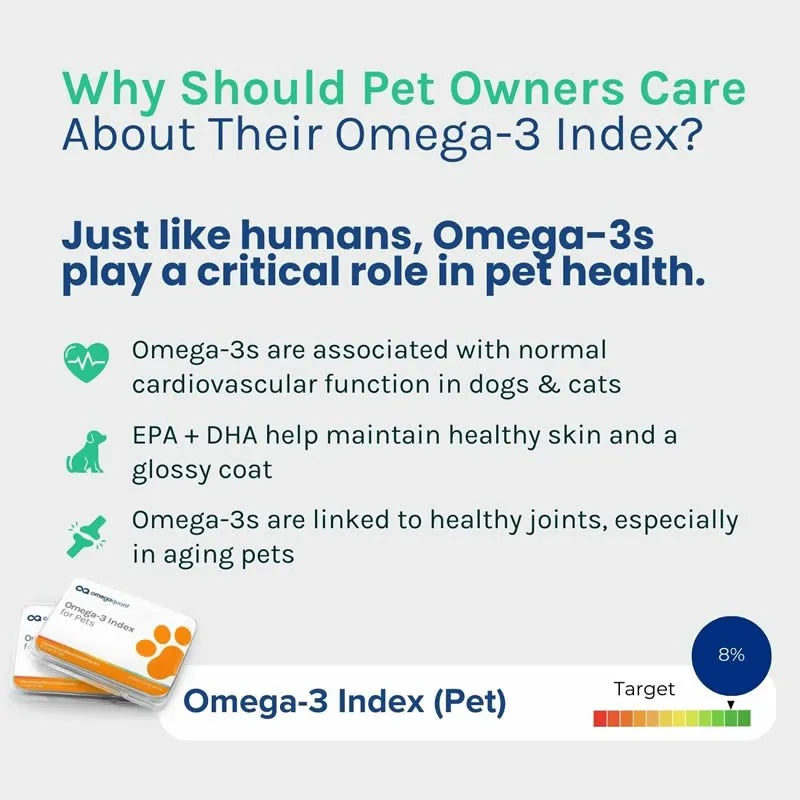
Current data suggest that dogs tend to sit at lower omega‑3 levels than humans, and that a target range around 3–8% is associated with better health markers in pets. Instead of chasing the highest possible number, we’re aiming for that “supported but sensible” zone that fits comfortably into a whole‑body wellness plan.
Why this matters for your dog
Balanced omega‑3 status has been linked to support for:
-
Skin and coat health
-
Joint comfort and mobility
-
Heart and circulatory health
-
Brain and nervous system function
-
Immune balance and healthy inflammation responses
At the same time, excessive or poorly balanced fats can create their own set of issues. Testing lets us be precise: we can see where your dog is now, make a thoughtful plan to adjust intake, and then retest later to confirm the changes are actually landing in the body.
What’s included in the Omega‑3 Index for Pets kit
-
OmegaQuant Omega‑3 Index for Pets collection materials
-
Simple instructions for your veterinary team to collect the blood sample
-
Pre‑paid mailer or shipment materials to send the sample to the lab
-
A detailed lab report showing your dog’s Omega‑3 Index, where it falls relative to the suggested range, and practical guidance on increasing or maintaining levels
This particular test is designed for dogs (and, depending on current OmegaQuant capabilities, may include some guidance for cats; the core validation has focused on canines).
How the process works
-
Order your kit
Purchase the Omega‑3 Index for Pets test through my shop. You’ll receive the kit with everything needed for sample collection and submission to the lab. -
Visit your veterinarian
Because this test uses a blood sample, your veterinarian or their team will perform a quick blood draw following the enclosed instructions. -
Send the sample in
The clinic (or you, if arranged) sends the sample to OmegaQuant using the provided mailer and registration details. -
Get clear, actionable results
Once the lab processes the sample, you receive a report showing your dog’s Omega‑3 Index as a percentage, where it sits relative to the suggested range, and general ideas for increasing EPA and DHA if needed. -
Translate numbers into a food‑first plan
This is where I come in. We can use your dog’s results to tailor their diet, whole‑food omega‑3 sources, and any supplemental EPA/DHA so we’re not guessing at “how much fish oil” anymore.
How I use this test in a holistic plan
On its own, a lab number doesn’t change your dog’s life. Combined with a full intake (diet, environment, health history, current concerns), the Omega‑3 Index becomes a powerful compass.
Here’s how I typically integrate it:
-
If your dog’s index is low
We look at adding or upgrading whole‑food omega‑3 sources (like specific fish, green‑lip mussel, or high‑quality marine oils), adjusting fat balance in the diet, and choosing a dose that makes sense for your dog’s body size and context. -
If your dog’s index is in a good range
We focus on maintaining that status with sustainable, food‑first strategies and avoid unnecessary “more is better” supplementation. -
If your dog’s index is very high
We talk about where all that omega‑3 is coming from, whether it still makes sense, and how to re‑balance fats in a way that feels safer and more aligned with your dog’s whole picture.
This is not about treating disease or replacing veterinary care; it’s about giving you and your vet better information so your dog’s fat intake is intentional, not accidental.
Is the Omega‑3 Index test right for your dog?
This kit is especially helpful if:
-
Your dog is already on an omega‑3 supplement and you want to know if it’s actually doing anything.
-
Your dog has skin, joint, heart, or inflammatory issues and your care team is considering omega‑3 strategies.
-
You prefer data‑driven, food‑first decisions instead of “just add more oil and hope.”
-
You’re building a long‑term wellness plan and want to make sure the foundation nutrients are truly covered.
If you’re not sure whether this is the right next step, we can absolutely talk through your dog’s history and priorities first and decide together where omega‑3 testing fits in their larger wellness roadmap.